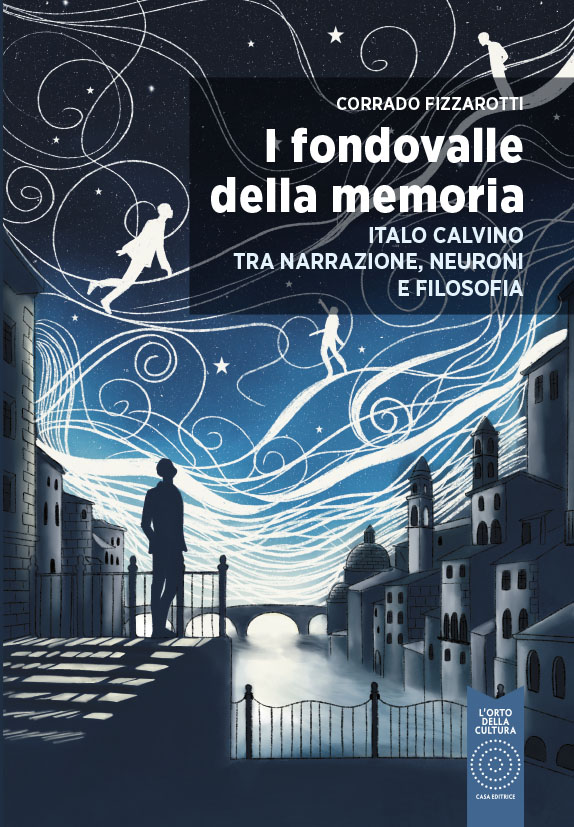
To remember a road, a film image or a battle is also to choose the words through which that past can return. In Italo Calvino’s writing, this activity reveals a distance between an event and its recollection, between experience and narrative, and between a past self and the person now trying to tell its story. I fondovalle della memoria follows that distance as a philosophical problem.
The book focuses particularly on autobiographical writings and texts connected with Calvino’s experience of the Italian Resistance. La strada di San Giovanni, Autobiografia di uno spettatore and Ricordo di una battaglia reveal different ways in which the past takes shape: relationships with landscape and a father, the imaginative world of cinema, and the difficulty of reconstructing a collective experience. Memory selects, arranges, loses and alters. Narrative gives it a form that can be shared, bringing further transformations in the process.
This is philosophy conducted through Calvino, taking seriously the questions made visible by his writing. How can we sustain a relationship with reality when language remains partial? What supports a person’s continuity when the past is reconstructed in the present? How does private recollection relate to the images a community preserves of itself? The inquiry also draws on Calvino’s critical and theoretical writings, relating the discipline of composition to the movement of experience.
In the final part, psychology and the biological basis of memory broaden the discussion towards embodied mind. Remembering is considered within bodily, emotional, linguistic and social conditions, which intersect in the concrete activity of recollecting and telling. The resulting encounter between literature and the sciences of mind addresses readers of Calvino as well as those interested in memory, identity and narrative. Published in Italian in 2023, the volume offers a way into questions that remain active whenever we try to give the past an intelligible form.