Begin with the vocabulary
The opening chapters examine how nature, artificiality and moral patienthood define the field. They offer an initial map for readers seeking to understand why animal ethics and environmental ethics sometimes diverge.
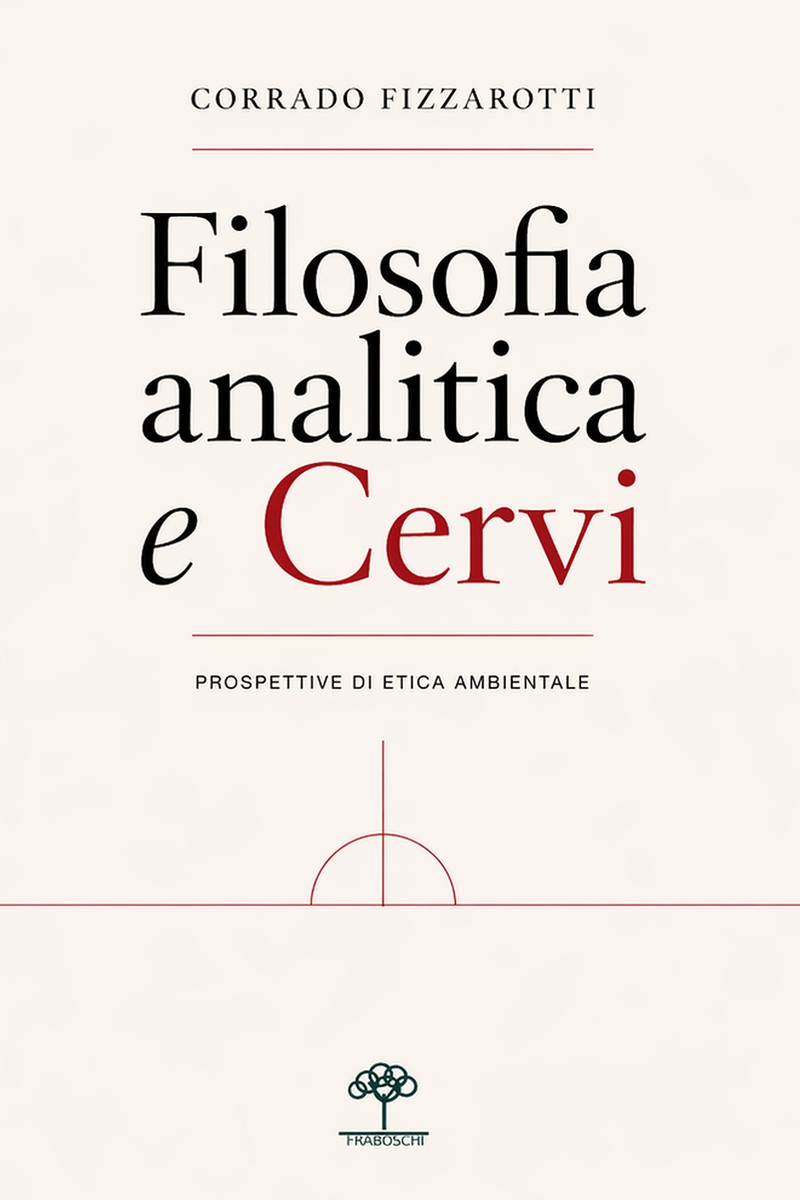
Books / 02
A route through the concepts and conflicts of environmental ethics: animals, ecosystems, justice, care and value. Twenty-five chapters introduce competing theories and test what they mean for decisions.
A deer can make a philosophical problem suddenly concrete. Can protecting an environment justify sacrificing one of the animals that inhabit it? Which reasons matter, and who decides which beings belong within the discussion? Filosofia analitica e cervi takes seriously the friction between theoretical maps and situations in which a decision is required. Its title also signals its voice: conceptual analysis shares space with examples, provocations and humour.
Developed in connection with teaching environmental ethics, the volume offers an extensive journey across twenty-five chapters. Its opening stages examine the vocabulary through which problems are framed: nature, artificiality, environment, animal and moral patient. These distinctions shape both what becomes visible and what may be excluded. The discussion then turns to climate and intergenerational justice, competing accounts of individuals and living systems, and the relationship between agency and responsibility.
The focus subsequently shifts to theories of value and their assumptions: intrinsic and relational value, individualism and holism, the construction of judgements, care and dependence. A sequence of chapters introduces influential figures and traditions: Aldo Leopold, Holmes Rolston III, J. Baird Callicott and Arne Næss; pragmatism and ecofeminism; Mary Midgley, Val Plumwood and Donna Haraway. The final stages connect these debates to ethics, politics and design, returning to the difficulty of acting when principles pull in different directions.
Readers can follow the book from beginning to end or enter through a particular question and trace the arguments that support it. Its purpose is to provide distinctions that can be used and to show how much work their application demands. Careful argument therefore accompanies questions about vulnerability, power and coexistence with non-human life. The first edition was self-published in Italian in April 2026 as the opening volume of the Radure series. It addresses students, teachers and readers who want to engage with the internal disagreements of environmental ethics, following the passage from categories to responsibilities.
The opening chapters examine how nature, artificiality and moral patienthood define the field. They offer an initial map for readers seeking to understand why animal ethics and environmental ethics sometimes diverge.
The conflict between concern for individuals and protection of ecological wholes runs through the chapters on ontology and value. Here theoretical distinctions become criteria for decisions with consequences for particular living beings.
The later chapters invite comparison between authors and traditions, from Leopold to Haraway. The concluding discussion brings these perspectives back to forms of action, collective decisions and the design of the environments in which we live.
A problem-led reading can begin with three questions: who can be harmed, what makes something morally significant, and who is answerable for decisions? The chapters on moral patienthood, value and agency offer different points of entry. Returning to the same case after each stage helps reveal changes in how the conflict is described and which reasons are considered relevant.
The chapters on individual thinkers can be read for specific differences: the unit of moral concern, the role of relationships, the justification of value and the connection between knowledge and action. The Midgley profile and the JoLMA article, available through the links, provide two independent studies. Continuità then offers a closer view of the author’s own proposal.
From Mary Midgley to conflicts in animal and environmental ethics: five stops across books, research and public discussion.
Explore this path →